
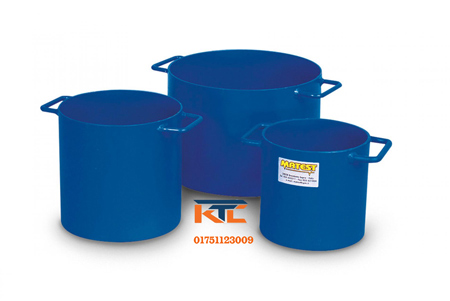


Ktcdhaka of Unit weight:
We always try to sell civil technical ktcdhaka of Unit weight product and always flexible with customer we try to do business nicely.
What is meant by Read the full article to learn about the unit weights of various construction materials, as well as the simple methods and formulas for measuring them.
Civil Engineering-এ বিভিন্ন কনস্ট্রাকশন মেটেরিয়ালের Specific Weight / Density জানা অত্যন্ত গুরুত্বপূর্ণ।
Specific Weight Definition:
Specific Weight is the weight per unit volume of a material.
It is usually expressed in $\text{kN/m}^3$ or $\text{kg/m}^3$.
Most Important Materials & Specific Weight
| Material Name | Specific Weight (kg/m3) | Specific Weight (kN/m3) |
| Plain Cement Concrete (P.C.C.) | $2,400 \text{ kg/m}^3$ | $24 \text{ kN/m}^3$ |
| Reinforced Cement Concrete (R.C.C.) | $2,500 \text{ kg/m}^3$ | $25 \text{ kN/m}^3$ |
| Steel / Rebar | $7,850 \text{ kg/m}^3$ | $78.5 \text{ kN/m}^3$ |
| Cement (Loose) | $1,440 \text{ kg/m}^3$ | $14.4 \text{ kN/m}^3$ |
| Water | $1,000 \text{ kg/m}^3$ | $9.81 \text{ kN/m}^3$ |
| Fine Aggregate (Dry Sand) | $1,600 \text{ kg/m}^3$ | $16 \text{ kN/m}^3$ |
| Coarse Aggregate (Brick chips / Stone chips) | $1,500 – 1,800 \text{ kg/m}^3$ | $15 – 18 \text{ kN/m}^3$ |
| Brick (Common Red Brick) | $1,600 – 1,900 \text{ kg/m}^3$ | $16 – 19 \text{ kN/m}^3$ |
| Brick Masonry | $1,900 \text{ kg/m}^3$ | $19 \text{ kN/m}^3$ |
| Bitumen / Asphalt | $1,040 \text{ kg/m}^3$ | $10.4 \text{ kN/m}^3$ |
| Soil (Dry) | $1,600 – 1,800 \text{ kg/m}^3$ | $16 – 18 \text{ kN/m}^3$ |
| Soil (Saturated) | $2,000 \text{ kg/m}^3$ | $20 \text{ kN/m}^3$ |
The khantrading corporation best product best weight Unit.
General & Civil Engineering Focused also known as specific weight is a fundamental physical property defined as the weight per unit volume of a material. In civil engineering and construction, knowing the precise unit weight of soil, aggregates, steel, and concrete is essential for accurate material takeoffs, structural design, and quality control testing.
Testing Equipment:-
Focused Explore our comprehensive guide and testing solutions for determining the various construction materials. Essential for technical engineering and laboratory testing, understanding unit weight ensures precise volumetric analysis and material compliance with industry standards.
When is used?
This is very important in construction, civil engineering, estimation, and material takeoff.
1. Material quantity estimation
If you calculate concrete volume from a drawing, can help determine the concrete’s total weight.
2. Steel estimation
For reinforcement steel:
Weight=Volume\times Density.
or, when using standard steel weight formulas, you can determine the weight of bars from their diameter and length.
3. Cost estimation / BOQ
When material is purchased or priced by kg/ton, but the drawing gives the quantity in m³, allows you to convert the quantity.
4. Structural design
Engineers use to calculate the dead load of concrete, masonry, flooring, soil, etc.
5. Material takeoff
For your construction material takeoff and cost estimation, this is particularly useful when converting:
Volume → Weight → Quantity → Cost
Simple example for takeoff
Suppose a drawing gives:
Concrete = 25 m³
concrete ≈ 2400 kg/m³
[ 25\times2400=60,000\ kg ][ =60\ tons ]
So:
25 m³ concrete ≈ 60 tons by weight.
Be the first to review “Unit weight 2026 best”
You must be logged in to post a review.
Related products







Reviews
There are no reviews yet.