

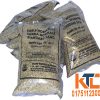
Standard sand-25kg bag
ASTM C778:
I’m unable to directly display images, but I’ll provide clear instructions and descriptions to guide you through using best ASTM C778, along with links to relevant images. This is an international standard specification for the “standard sand” (standard silica sand) used in hydraulic cement testing (for example, in the ASTM C109 compressive strength test or the air content test).
Understanding ASTM C778:
- Purpose: This standard ensures consistency in test results for hydraulic cements by defining the grading, purity, and other properties of the sand used in testing.
- Scope: It covers two types of standard sand:
- Graded Sand: Conforms to specific sieve size requirements for particular tests image link.
- 20-30 Sand: Has a specific particle size distribution for general cement testing
Using:
-
Obtain Standard Sand:
- Purchase compliant sand from a reputable supplier.
- Verify that the sand is properly labeled as either “Graded Sand” or “20-30 Sand”.
Review Relevant Test Methods:
- Consult the specific you’ll be performing (e.g., ASTM C109 for compressive strength, C185 for air content).
- These methods outline the exact procedures for using the standard sand, including:
- Sieving
- Measuring moisture content.
- Mixing with cement .
- Casting and curing test specimens.
-
Follow Test Procedures:
- Adhere strictly to the instructions in the relevant method.
- Use calibrated equipment and instruments.
- Maintain proper temperature and humidity conditions during testing.
-
Record and Analyze Results:
- Document test results accurately and thoroughly.
- Compare results to specifications or benchmarks for evaluation.
Key Considerations:
- Storage: Store standard sand in dry, airtight containers.
- Safety: Wear appropriate PPE when handling sand and conducting tests.
- Laboratory Accreditation: Ensure accreditation for specific ASTM test methods if used for compliance purposes.
Additional Resources best ASTM C778:
- Concrete Research and Testing Organizations: These organizations often provide guidance and training on ASTM standards.
Ktcdhaka in ASTM C778:
We always try to sell ASTM C778 of ktcdhaka product and always flexible with customer we try to do business nicely.
Q: What is the difference between ASTM C778 20-30 Sand and Graded Sand? A: Under ASTM C778 specifications, 20-30 Sand primarily passes through an 850-µm (No. 20) sieve and is retained on a 600-µm (No. 30) sieve. It is mainly used in ASTM C185 air content tests. Graded Sand covers a wider grain size distribution between 600-µm (No. 30) and 150-µm (No. 100) sieves and is primarily used for ASTM C109 compressive strength testing of hydraulic cement mortars.
When is ASTM C778 Used?
The standard sand is used during laboratory testing and quality control procedures for hydraulic cements and cementitious materials.
-
During Quality Control Testing: Used when testing new batches of cement at manufacturing plants or quality-assurance laboratories to ensure consistency with standard strength requirements.
-
During Research & Material Evaluation: Used whenever researchers test new cement additives, supplementary cementitious materials (like fly ash or slag), or chemical admixtures to establish comparative baseline data.
-
During Standardized ASTM Tests: It is specifically specified for key standard test methods, including:
-
ASTM C109 / C109M: Test Method for Compressive Strength of Hydraulic Cement Mortars (using 2-in. or [50-mm] cube specimens).
-
ASTM C185: Test Method for Air Content of Hydraulic Cement Mortar.
-
Where is ASTM C778 Used?
The sand is used across structural testing facilities and material engineering applications:
-
Testing Laboratories: Commercial testing labs, university engineering research centers, and government transportation departments (e.g., DOT labs).
-
Cement Manufacturing Plants: In internal QC/QA labs to certify cement batches before shipping.
-
Concrete & Admixture Production Facilities: To test how different chemical admixtures (like superplasticizers or accelerators) behave under standard mortar conditions.
-
Geographical Sourcing: The sand itself is typically processed natural silica sand, historically originating from Ottawa, Illinois (often referred to generically as Ottawa Sand), or other certified standard silica deposits.
Why is ASTM C778 Used?
The primary purpose is to provide a standardized control variable in hydraulic cement mortar testing.
-
Eliminates Aggregate Variability: Regular construction sand varies significantly in particle shape, mineral composition, silt content, and grading. Using standard sand ensures that test results reflect the performance of the cement, not variations in the sand Standard Sand for Cement Test.
-
Ensures High Chemical Purity: This is sand composed almost entirely of pure silica ($\text{SiO}_2 > 99\%$). It is chemically inert and free from organic impurities, clays, or salts that could skew test results.
-
Provides Consistent Particle Gradation & Roundness:
-
The sand grains are naturally rounded and uniformly graded, minimizing air voids and mechanical interlocking variances.
-
This is defines two specific standard grades:
-
20-30 Sand: Coarser grains passing a $850\,\mu\text{m}$ (No. 20) sieve and retained on a $600\,\mu\text{m}$ (No. 30) sieve (primarily used in ASTM C185 air content tests).
-
Graded Sand: A wider particle distribution sized between $600\,\mu\text{m}$ (No. 30) and $150\,\mu\text{m}$ (No. 100) sieves (primarily used in ASTM C109 compressive strength tests). Standard Sand for Cement Test.
-
-
Be the first to review “ASTM C778 2026”
You must be logged in to post a review.
Related products
Reviews
There are no reviews yet.