
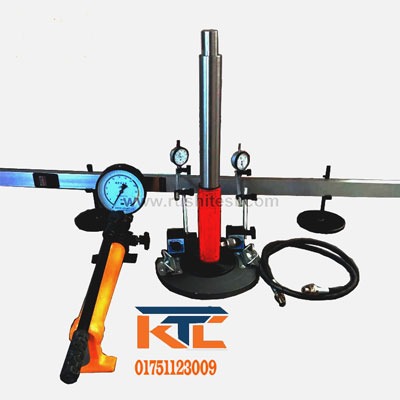
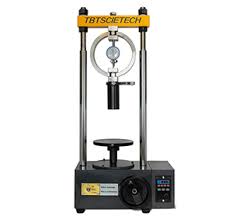
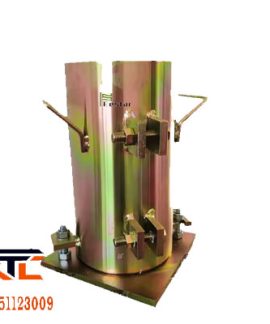
plate load test 50kn
Ktcdhaka of plate load test:
We always try to sell civil technical ktcdhaka of plate load test product and always flexible with customer we try to do business nicely.
What is a Plate Load Test?
A is an in-situ Plate load test conducted to determine the ultimate bearing capacity of the soil and the probable settlement under a given load. It is one of the most reliable methods for evaluating soil strength before constructing a foundation.
Purpose of the Test
-
Bearing Capacity: To find out how much load the soil can safely support per unit area.
-
Settlement Analysis: To measure how much the soil compresses or sinks under specific loads.
-
Foundation Design: To help engineers decide whether a shallow foundation (like isolated or mat footings) or a deep foundation (like piles) is required.
How is it Performed? (Procedure)
The test involves placing a steel plate on the soil at the proposed foundation level and applying incremental loads. Here are the step-by-step details:
-
Excavation: A pit is dug down to the exact depth where the actual foundation is planned to be laid.
-
Placing the Plate: A heavy steel plate (typically circular or square, ranging from 30 cm to 75 cm in diameter) is placed flat and level on the prepared soil surface.
-
Loading Setup: A hydraulic jack is placed on top of the plate, reacting against a heavy loaded platform or reaction beam (often loaded with sandbags or concrete blocks).
-
Applying Load: Load is applied in gradual increments (stages).
-
Measuring Settlement: Dial gauges are attached to measure the downward movement (settlement) of the plate at each load increment.
-
Completion: The test continues until the soil fails, or until the load reaches a pre-determined maximum limit (usually 1.5 to 2 times the estimated safe plate load test capacity).
Limitations of the Test
-
Depth Limitation: It only tests the soil characteristics up to a limited depth (usually about twice the width of the plate). It does not reflect deep soil strata conditions.
-
Size Effect: The test plate is much smaller than an actual building foundation, which can sometimes lead to scale-effect differences in granular soils.
Would you like to know about the formula or calculations used in this test?
Be the first to review “plate load test”
You must be logged in to post a review.
Related products


All Categories

Reviews
There are no reviews yet.