
1pcs=600/=
S.S Tong:
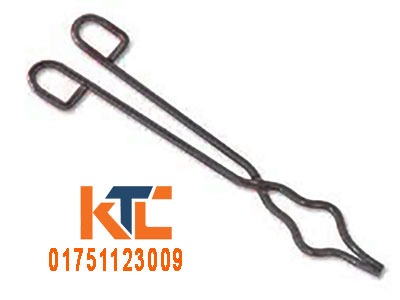
Stainless steel S.S Tong crucible tongs are commonly used in laboratories and workshops to handle hot crucibles, beakers, and other heat-resistant vessels. They are designed to provide a secure grip and protect your hands from burns. Here’s a guide on how to use them:
1. Choose the right S.S Tong:
There are different types of stainless steel crucible tongs available, each with its own purpose. Some common types include:
- Straight tongs: These are the most versatile type and can be used for handling a variety of shapes and sizes of crucibles.
- Bowed tongs: These tongs have a curved jaw that is ideal for gripping round crucibles.
- Crucible tongs with pouring spouts: These tongs have a special spout that allows you to pour molten materials from the crucible.
2. Open the S.S Tong:
Most stainless steel crucible tongs have spring-loaded handles that keep them closed. To open the tongs, squeeze the handles together until the jaws open wide enough to fit the crucible.
3. Grip the crucible:
Place the crucible in the center of the jaws. The jaws should be large enough to fully enclose the crucible without slipping.
4. Close the tongs:
Slowly release the handles of the tongs to allow the jaws to close around the crucible. Make sure the crucible is secure and will not slip out.
5. Handle the crucible:
Once the crucible is S.S Tong securely gripped, you can use the tongs to lift, move, or tilt it as needed. Be careful not to bump or jostle the crucible, as this could cause it to tip over.
6. Cool the crucible of S.S Tong:
When you are finished using the crucible, place it on a heat-resistant surface to cool. Do not attempt to pick up a hot crucible with bare hands, even if it is made of stainless steel.
Here are some additional tips for using stainless steel crucible tongs:
- Wear heat-resistant gloves: Even though the tongs are made of stainless steel, they can still conduct heat and burn your hands. Always wear heat-resistant gloves when handling hot crucibles.
- Don’t overload the tongs: The tongs are only designed to handle a certain amount of weight. Do not overload them with a crucible that is too heavy, as this could cause them to break.
- Inspect the tongs regularly: Before each use, make sure the tongs are in good condition and that the jaws are properly aligned. If you see any cracks, bends, or other damage, do not use the tongs.
- Clean the tongs: After each use, clean the tongs with soap and water to remove any chemicals or residues.
By following these tips, you can safely and effectively use stainless steel crucible tongs to handle hot crucibles and other heat-resistant vessels.
What is an S.S. Tong?
An S.S. Tong is a scissor-style or spring-loaded gripping instrument constructed from high-grade stainless steel (commonly AISI 304 or 316).
Key Characteristics:
-
Material Integrity: Highly resistant to heat, rust, corrosion, and chemical exposure.
-
Design: Features long arms to maintain a safe distance between the operator’s hands and high-heat or hazardous sources.
-
Tip Variations: Tips can be straight, curved, serrated, or coated (e.g., silicone or PTFE) depending on the shape and sensitivity of the item being handled.
When is an S.S. Tong Used?
An S.S. Tong is used whenever safety, thermal isolation, or contamination control is required during material handling:
-
High-Temperature Handling: When transferring crucibles, evaporating dishes, or beakers directly into or out of high-heat environments like muffle furnaces, drying ovens, or bunsen burner flames.
-
Chemical & Acid Work: When handling items exposed to corrosive acids, solvents, or reactive chemical baths where standard steel or plastic tools would degrade.
Where is an S.S. Tong Used?
S.S. Tongs are standard equipment across multiple professional and technical settings:
| Setting | Primary Application |
| Civil & Material Testing Labs | Moving aggregate drying pans, soil moisture tins, and core samples out of high-temperature drying ovens. |
| Chemical & Analytical Labs | Handling hot crucibles during ash content analysis or gravimetric testing. |
| Metallurgical & Foundry Facilities | Grabbing small hot metal components, heat-treated samples, or melting dishes. |
| Pharmaceutical & Life Science Labs | Handling glassware and tools in sterile zones, cleanrooms, and autoclaves. |
| Industrial Processing Plants | Assisting quality control technicians in retrieving hot or chemically treated test specimens. |
Be the first to review “S.S Tong 2026 best”
You must be logged in to post a review.
Related products



Reviews
There are no reviews yet.