
best Dynamic cone penetrometer (DCP):
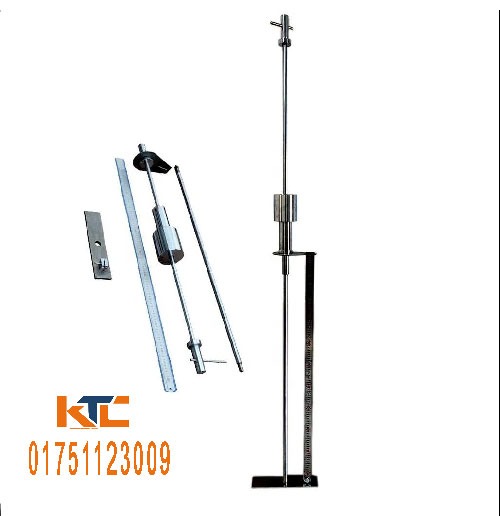
The best Dynamic Cone Penetrometer (DCP) is a widely used field-testing tool in geotechnical and civil engineering for rapidly assessing the strength and mechanical properties of soil layers, particularly in pavement design and foundation planning.
🛠️ How the
best Dynamic cone penetrometer (DCP):
The best Dynamic Cone Penetrometer (DCP) fundamental principle of the DCP is to measure the resistance of the soil to penetration by a cone tip driven by a falling weight.2
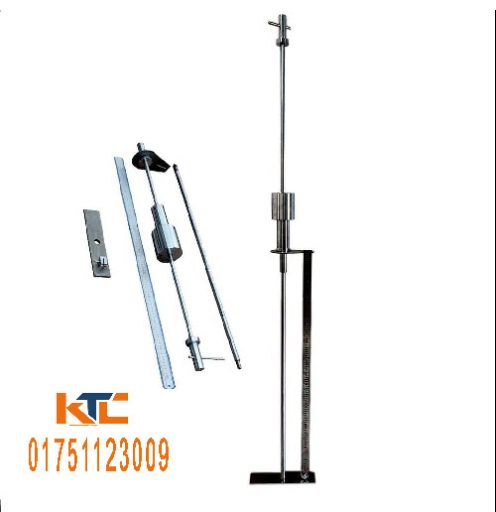
- Driving Mechanism of best Dynamic cone penetrometer (DCP): The dynamic-cone-penetrometer-dcp apparatus consists of a rod with a cone-shaped steel tip at the bottom, an anvil, and a sliding drop hammer (typically 8 kg or 9 kg) on an upper shaft .
- Impact and Penetration: The best Dynamic Cone Penetrometer (DCP) operator manually raises the hammer to a standard height (often 575 mm) and allows it to free-fall onto the anvil.3 This impact drives the cone tip a certain distance into the ground.4
- Data Recording of best Dynamic cone penetrometer (DCP): The penetration depth is measured and recorded after a set number of blows (e.g., 1, 2, 5, or 10 blows, depending on the material’s strength) or after a set depth interval (e.g., every 10 mm).5
- DCP Index Calculation: The dynamic-cone-penetrometer-dcp data is used to calculate the DCP Penetration Index (DPI), which is the average penetration rate, typically expressed in millimeters per blow (mm/blow).6
- Interpretation:
- Deeper penetration (High DPI/Low Blow Count): Indicates weaker, looser, or less-compacted soil.7
- Shallower penetration (Low DPI/High Blow Count): Indicates stronger, denser, or well-compacted soil.8
- The DPI can be correlated to other key soil parameters, such as the California Bearing Ratio (CBR) and shear strength, which are essential for engineering design.9
🧑💻 Who Uses the
best Dynamic cone penetrometer (DCP) and Why?
The best Dynamic Cone Penetrometer (DCP) is an invaluable tool used by various professionals in the construction and engineering sectors:
- Geotechnical Engineers and Technicians: They use it during site investigations to:
- Determine the bearing capacity of foundation soils for structures (buildings, bridges, etc.).11
- Identify the thickness and location of different soil layers (strata).12
- Assess soil strength profiles at various depths.13
- Civil Engineers and Pavement Designers: They use it extensively for road, runway, and pavement construction to:14
- Evaluate the suitability and strength of subgrade and base course materials.15
- Check the compaction quality of engineered fills and pavement layers.16
- Locate weak spots or under-compacted areas in the structure.
- Site Inspectors and Contractors: They use it for quality control and rapid, on-site checks because the DCP is:
- Cost-effective and simple to operate (minimal training required).17
- Portable and can be used in remote or difficult-to-access locations.
- Provides real-time data for quick decision-making.18
The best Dynamic Cone Penetrometer (DCP) test is generally performed by a small crew (one to three operators) who maintain the instrument vertically, raise and drop the hammer freely, and record the penetration measurements.
You might be interested in watching How to use a best Dynamic Cone Penetrometer for a visual guide on the test procedure.
Be the first to review “best Dynamic cone penetrometer (DCP),”
You must be logged in to post a review.
Related products
All Categories

Reviews
There are no reviews yet.